


Electric motors are essential to industrial production, powering conveyors, pumps, compressors, processing equipment and a wide range of automated machinery. Their reliable operation depends not only on the motor itself but also on the electrical components responsible for starting, stopping, controlling and protecting it.
An industrial motor control circuit typically contains several devices with different responsibilities. Contactors handle electrical switching, overload relays monitor motor operating conditions, motor protection circuit breakers provide circuit protection, and soft starters help manage motor acceleration.
Although these components may be installed within the same control cabinet, they are not interchangeable. Understanding how they work together is important for equipment maintenance, electrical system inspection and industrial spare-parts procurement.
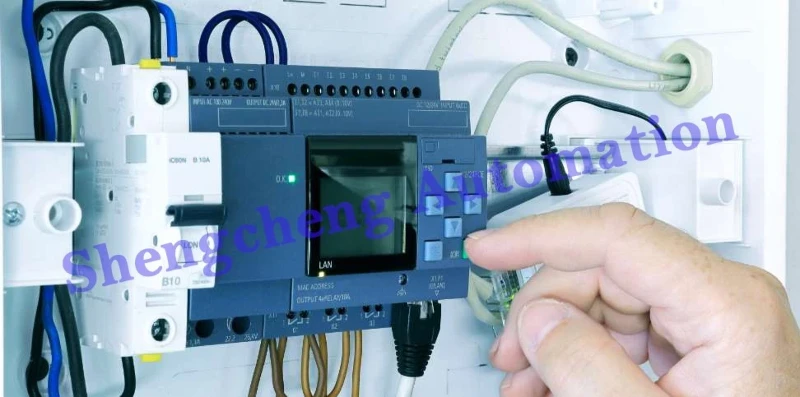
The Main Components of an Industrial Motor Control System
A conventional motor control arrangement can involve several layers of electrical control and protection.
The contactor establishes or interrupts the electrical connection to the motor. The overload protection device responds to excessive motor current over time, while upstream circuit protection addresses electrical faults such as short circuits. Depending on the application, a soft starter may also be incorporated to control the motor's starting process.
The actual configuration varies according to motor characteristics, operating conditions, control requirements and applicable electrical standards.
1. Contactors: Controlling Motor Power
A contactor is an electrically operated switching device used to establish or interrupt a power circuit. In motor control applications, it is commonly used to switch motors on and off through commands from push buttons, PLCs, control relays or other automation equipment.
Industrial contactors are available in different electrical ratings and configurations. Selection depends on factors such as the load type, operating voltage, switching frequency and required auxiliary contacts.
Examples from established industrial product families include:
- 100-C09DJ10 – Allen-Bradley IEC 9A Contactor
- 100-DCE-140 – Allen-Bradley IEC Renewal Main Contacts
- 100-SB10 – Allen-Bradley Auxiliary Contact Block
- AF210-30-11 – ABB Contactor
- A95-30-11-80 – ABB Contactor
The main contacts carry the switched power, whereas auxiliary contacts are generally used in control circuits for status indication, electrical interlocking and control logic.
This distinction becomes important when troubleshooting a motor starter. A problem with an auxiliary contact does not necessarily indicate that the main power contacts have failed.
For maintenance teams, replacement contact sets and auxiliary contact blocks can therefore be just as relevant as complete contactors.
2. Overload Relays: Protecting Motors During Excessive Loading
Motor overload protection addresses conditions in which a motor draws excessive current for an extended period. Such conditions can arise from mechanical overload, abnormal operating conditions, phase-related problems or other disturbances, depending on the protection device and its design.
Thermal and electronic overload relays are commonly used in motor starter arrangements.
A thermal overload relay typically uses the heating effect associated with current flow to respond to sustained overload conditions. Electronic overload relays use electronic measurement and processing to evaluate operating conditions and provide protective responses.
Products represented in the existing inventory include:
- TA110DU-90 – ABB Thermal Overload Relay
- 193-EEGE – Allen-Bradley Solid-State Electronic Overload Relay
These devices serve an important role in motor protection, but they should not be confused with short-circuit protective devices.
An overload relay is generally used together with an appropriate short-circuit protection arrangement. The exact coordination depends on the motor starter design and applicable standards.
When replacing an overload relay, maintenance personnel should check the required current setting range, compatibility with the associated contactor or starter, mounting arrangement and control circuit requirements.
3. Motor Protection Circuit Breakers
Motor protection circuit breakers combine circuit switching with protective functions intended for motor circuits.
Depending on the device design, they can provide adjustable or fixed protection against motor overload and short-circuit conditions. They are frequently used in compact motor starter arrangements.
Examples include:
- 140M-C2E-B16 – Allen-Bradley Motor Protection Circuit-Breaker
- 140MG-G8P-C70 – Allen-Bradley Motor Circuit Protector
Although these products belong to the broader motor protection category, their precise protective functions and application requirements should be checked against their respective manufacturer documentation.
A motor protection circuit breaker should not automatically be treated as equivalent to a conventional overload relay. Their protective roles, trip characteristics and installation arrangements can differ.
For replacement purposes, identifying the complete catalog number and original protection configuration is essential.
Soft Starters and Their Role in Motor Starting
When an AC motor starts directly across the supply, it can draw a relatively high starting current and produce a significant mechanical torque transition.
In applications where this starting behavior needs to be managed, a soft starter may be used.
A soft starter gradually controls the voltage applied to the motor during starting, helping reduce starting current and mechanical stress compared with direct-on-line starting. Depending on the model, additional operating functions may also be available.
Two ABB product families represented in the current inventory are:
- PSR30-600-11 – ABB PSR Softstarter
- PST85-600-70 – ABB PST Softstarter
Another example is the Allen-Bradley 150-F108NBD SMC Flex Smart Motor Controller, which belongs to the SMC Flex family of motor control products.
These products illustrate that soft starters are available in different product families and configurations. They should not be selected solely by comparing their physical size or nominal ratings.
The motor's operating requirements, supply characteristics, starting frequency, load conditions and required control functions all need to be considered.
Soft Starter vs. Variable Frequency Drive
Soft starters and variable frequency drives are sometimes discussed together because both are used in motor control applications. However, their operating purposes are different.
A soft starter primarily manages the motor's starting and, where supported, stopping behavior. Once the motor has reached its intended operating condition, it generally operates at the supply frequency.
A variable frequency drive controls motor speed by changing the output frequency and voltage. This makes it suitable for applications that require ongoing speed adjustment during operation.
For example, a conveyor that operates at a fixed speed may use a conventional starter or soft starter, depending on its requirements. A pump or production machine requiring frequent speed adjustment may benefit from a variable frequency drive.
The choice should be based on the actual operating process rather than treating the two technologies as direct alternatives.
How These Components Work Together
The components described above perform different tasks within a motor control arrangement.
A simplified motor starter may include:
- A circuit protection device to address electrical faults.
- A contactor to switch the motor power circuit.
- An overload relay to monitor sustained motor overload conditions.
- A control circuit to issue start and stop commands.
- A soft starter when controlled motor acceleration is required.
Not every installation uses all these components separately. Some devices integrate multiple functions, while other systems use different starter architectures.
The important point is to understand the function of each installed component before replacing or modifying the arrangement.
Common Maintenance and Replacement Considerations
Motor control components operate under electrical and mechanical stresses. Over time, switching contacts can wear, protective devices can deteriorate, and auxiliary components may become unreliable.
When a motor starter requires maintenance, replacing the visibly damaged component without checking the wider arrangement may not resolve the underlying problem.
Several details deserve attention:
Contactor identification
Check the complete model number, coil requirements, contact configuration and electrical utilization category. A similar-looking contactor may have a different coil or switching capability.
Overload protection
Confirm the motor's rated current, overload relay adjustment range, reset arrangement and compatibility with the starter.
Short-circuit protection
Check the protective device type, rated characteristics and coordination with the motor starter.
Soft starter compatibility
Verify the motor rating, supply conditions, starting requirements and available control functions.
Accessories and replacement parts
Determine whether the actual requirement involves a complete starter, replacement main contacts, auxiliary contacts or another individual component.
These checks are particularly important in older installations where original equipment may have been in service for many years.

Managing Spare Parts for Industrial Motor Control Systems
For manufacturing facilities operating multiple motors, maintaining an accurate spare-parts inventory can help reduce equipment downtime.
A useful inventory record should include the manufacturer, complete catalog number, product family, electrical ratings, installed application and associated accessories.
It is also worth distinguishing between complete equipment and individual replacement components.
For example, 100-DCE-140 replacement main contacts and 100-SB10 auxiliary contact blocks serve different maintenance requirements from a complete contactor such as 100-C09DJ10.
Similarly, an overload relay such as 193-EEGE should be identified separately from the motor protection circuit breaker used elsewhere in the electrical arrangement.
This level of identification makes procurement more precise and reduces the risk of ordering a component that does not match the installed equipment.
Conclusion
Industrial motor control and protection depend on several complementary electrical components. Contactors handle switching, overload relays respond to sustained excessive loading, motor protection circuit breakers provide circuit protection, and soft starters help manage motor starting behavior.
Understanding these differences is essential when maintaining industrial equipment or sourcing replacement parts.
Rather than selecting a replacement based only on a broad product description, maintenance and procurement teams should begin with the original manufacturer, complete model number, electrical characteristics and installed system configuration. This provides a more reliable foundation for identifying the correct component and maintaining the continuity of industrial motor operations.