


Rockwell Automation has released a series of major announcements that could significantly influence the future of industrial automation, smart manufacturing, and PLC lifecycle management. From a new orchestration platform and AI-driven predictive maintenance to renewed cybersecurity warnings targeting industrial control systems, the company is clearly accelerating its digital manufacturing strategy while reinforcing the importance of legacy automation platforms.
FactoryTalk Orchestration Makes Its Official Debut at Automate 2026
From June 22–26, 2026, Rockwell Automation officially introduced FactoryTalk Orchestration at Automate 2026 in Chicago. The new software platform is positioned as an orchestration layer between enterprise systems such as MES and ERP and plant-floor controllers.
FactoryTalk Orchestration is designed to coordinate production workflows, material handling, autonomous mobile robots (AMRs), and multiple automation systems within a unified operational framework.
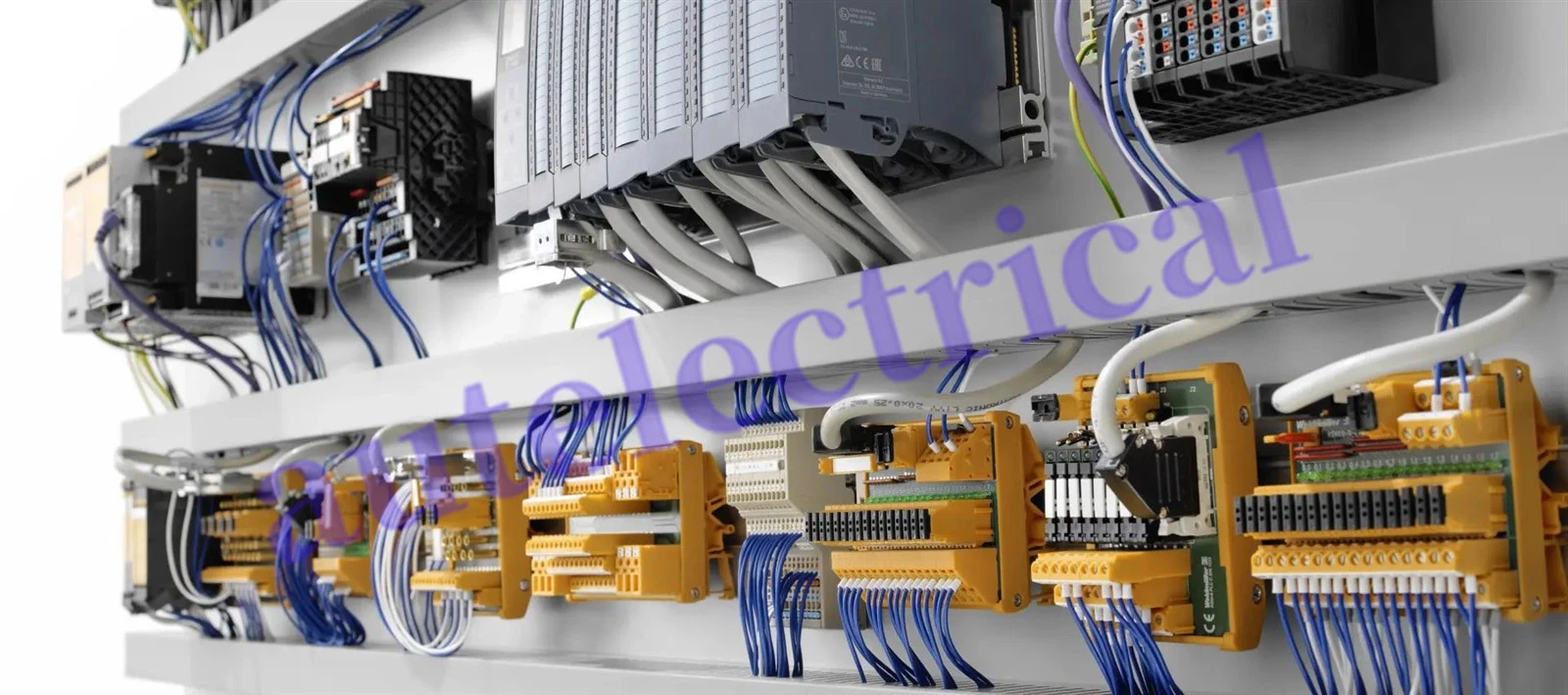
During the exhibition, Rockwell demonstrated a fully coordinated production scenario in which a filling station controlled by CompactLogix 5380, AMR delivery tasks, and a palletizing robot were synchronized through ERP-driven production orders. According to the on-site case study, a parts distribution center that adopted the platform reduced transfer-point waiting time by approximately 30%.
For manufacturers currently operating ControlLogix 1756-L6x/L7x, SLC 500, or PLC-5 systems, the most important implication is that orchestration can be deployed gradually. Legacy controllers will continue supporting production during the transition period, making spare-part availability and maintenance support increasingly important.
Rockwell and Augury Partner to Bring Agentic AI Maintenance to the Factory Floor
On July 23, 2026, Rockwell Automation announced a strategic partnership with industrial AI company Augury to develop an Agentic AI-based predictive maintenance solution.
The solution integrates Fiix® computerized maintenance management software (CMMS) with FactoryTalk® Optix™, creating a closed-loop workflow that spans equipment anomaly detection, fault diagnosis, maintenance planning, and work-order execution.
According to Rockwell's 11th Annual State of Smart Manufacturing Report, only 43% of industrial data collected by manufacturers is effectively utilized, and the gap between early warnings and maintenance execution remains a widespread challenge.
The key innovation of this collaboration is the integration between Augury's Reliability Agent and Fiix MAX AI, allowing maintenance tasks to be generated and assigned automatically once equipment risks are identified.
The first jointly developed solution is expected to be released in September 2026.
CISA Issues New OT Security Advisory, Renewing Focus on PLC Cybersecurity
On July 22, 2026, the Cybersecurity and Infrastructure Security Agency (CISA), together with the FBI, NSA, EPA, DOE, and other federal agencies, updated a joint cybersecurity advisory warning that Iran-linked advanced persistent threat (APT) groups continue targeting industrial PLC environments, including Rockwell/Allen-Bradley control systems.
The advisory states that attackers are exploiting EtherNet/IP communication ports (44818 and 2222) to compromise OT devices directly exposed to the internet, modify PLC project files, and manipulate HMI and SCADA displays.
CISA's primary recommendation is clear: remove PLCs and other OT assets from direct internet exposure and implement secure gateways and firewalls to isolate IT and OT networks.
For facilities operating older PLC platforms, cybersecurity protection is becoming just as important as hardware maintenance and spare-part management.

Market Outlook: Spare-Part Demand Is Likely to Remain Strong
Taken together, these developments point to several important market trends.
Phased Modernization Will Become the Dominant Strategy
FactoryTalk Orchestration supports step-by-step deployment rather than immediate replacement of existing automation systems. As a result, new and legacy equipment will coexist for extended periods, and demand for spare parts for older platforms is unlikely to decline rapidly.
Legacy Platforms Continue to Hold Strategic Value
Although platforms such as SLC 500, PLC-5, and ControlLogix 1756-L6x/L7x have been discontinued or are gradually being phased out, they remain the operational core of many production lines. During the transition toward orchestration-based manufacturing architectures, maintaining reliable inventories of these components becomes increasingly important.
Procurement Stability Is Becoming a Competitive Advantage
Industry reports indicate that CompactLogix 1769 series controllers, including 1769-L33ER and 1769-L36ERM, as well as analog modules such as 1769-IF8 and 1769-OF4, continue to experience lead times of 8–12 weeks.
For manufacturers seeking production continuity, proactive procurement planning and strategic spare-part inventory management remain the most effective way to reduce operational risk.
Conclusion
Rockwell Automation's recent announcements represent more than individual product launches. They signal a broader industry transition toward orchestrated manufacturing, AI-driven maintenance, and stronger OT cybersecurity. While digital transformation is accelerating, legacy PLC platforms continue to play a critical role in industrial production, making spare-part availability, maintenance planning, and cybersecurity protection essential priorities for manufacturers in 2026 and beyond.